
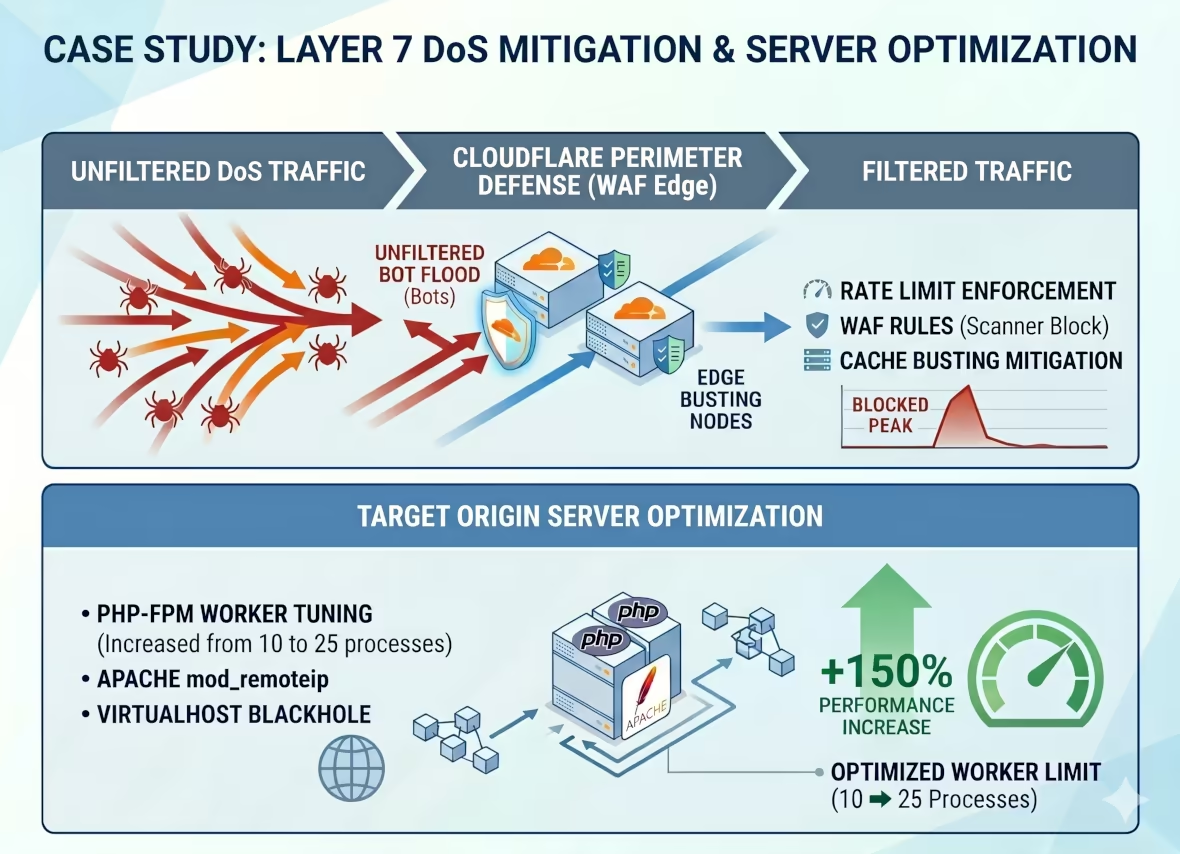
From the risk of server downtime to scalability during a Layer 7 DoS attack
Starting on March 17, a client’s e-commerce infrastructure faced targeted volumetric attacks and automated scans. The technical analysis of the incident focused primarily on the attack dynamics and Cloudflare logs. It was precisely through this initial investigation that a critical underlying issue emerged: the true cause of the outage lay in serious shortcomings in resource allocation on the origin server, managed by a third-party provider. This document provides a detailed analysis of the event and highlights how the structural limitations of managed hosting were uncovered, explaining how the subsequent optimization increased backend capacity by 150%, neutralizing subsequent threats with zero downtime.
Intervention Highlights
- Vector: Layer 7 attack (POST/GET flood) and vulnerability scanning from a single AWS IP.
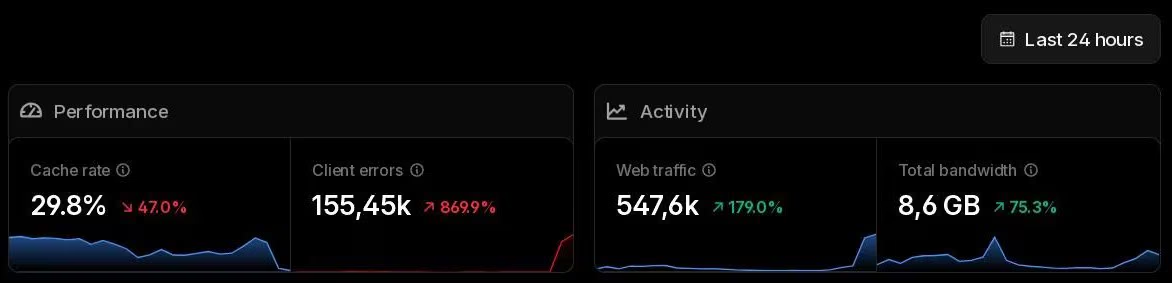
- Symptom: 503 Service Unavailable errors and a 47% drop in the Cache Rate on Cloudflare.
- Bottleneck: Insufficient provider configuration (10 PHP-FPM workers).
- Solution: Apache/PHP-FPM optimization, Black Hole VirtualHost, WAF rules, and caching.
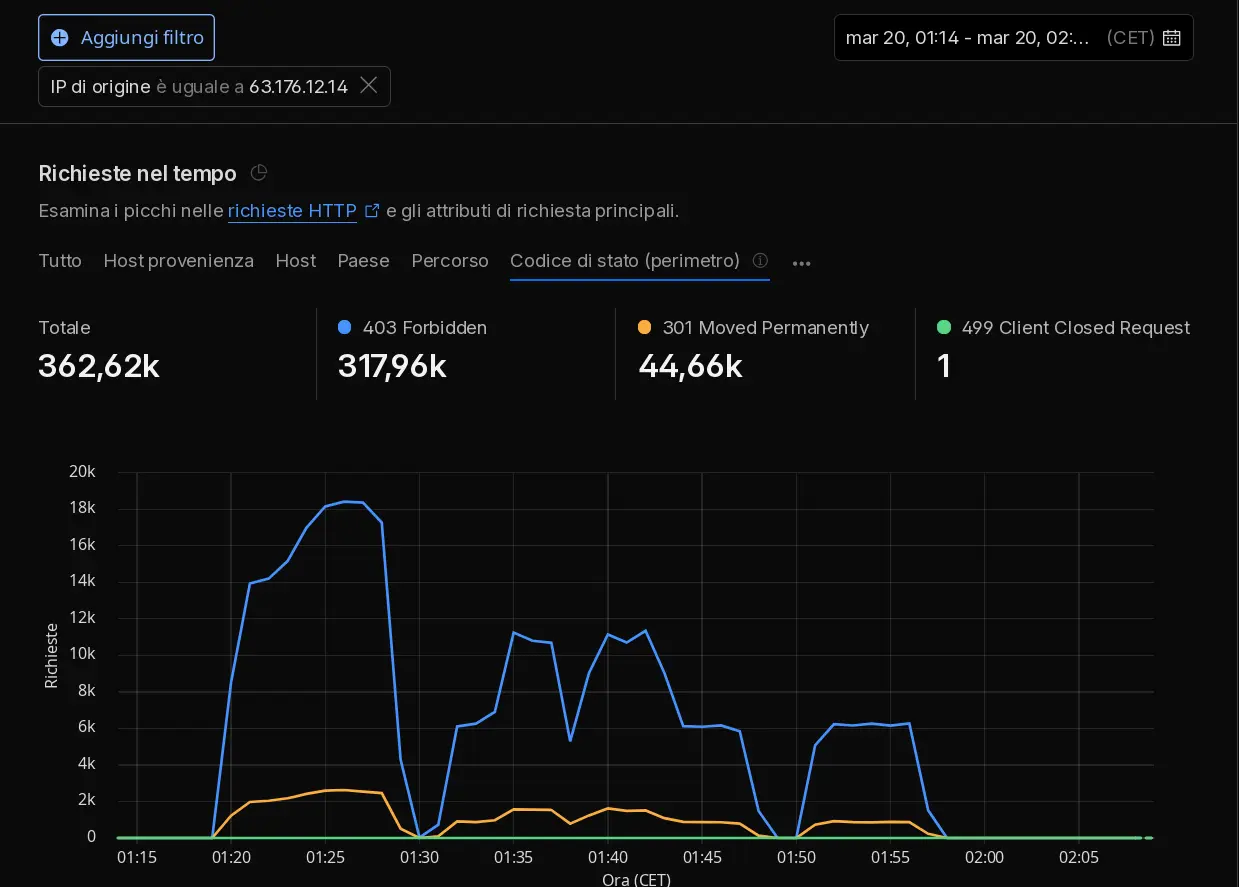
- Result: Dynamic capacity increased by 150%, and a second wave of 360,000 requests mitigated at the Edge.
Executive Summary: When Infrastructure Reaches "Resource Exhaustion"
The infrastructure suffered a complex and well-orchestrated volumetric and application-based attack. Using advanced software, the threat combined vulnerability mapping to exploit application vulnerabilities, DNS enumeration to bypass Cloudflare, and targeted techniques to evade the cache. Although the WAF perimeter barrier blocked most of the malicious traffic, the intensity of the requests caused memory and resource pool exhaustion.
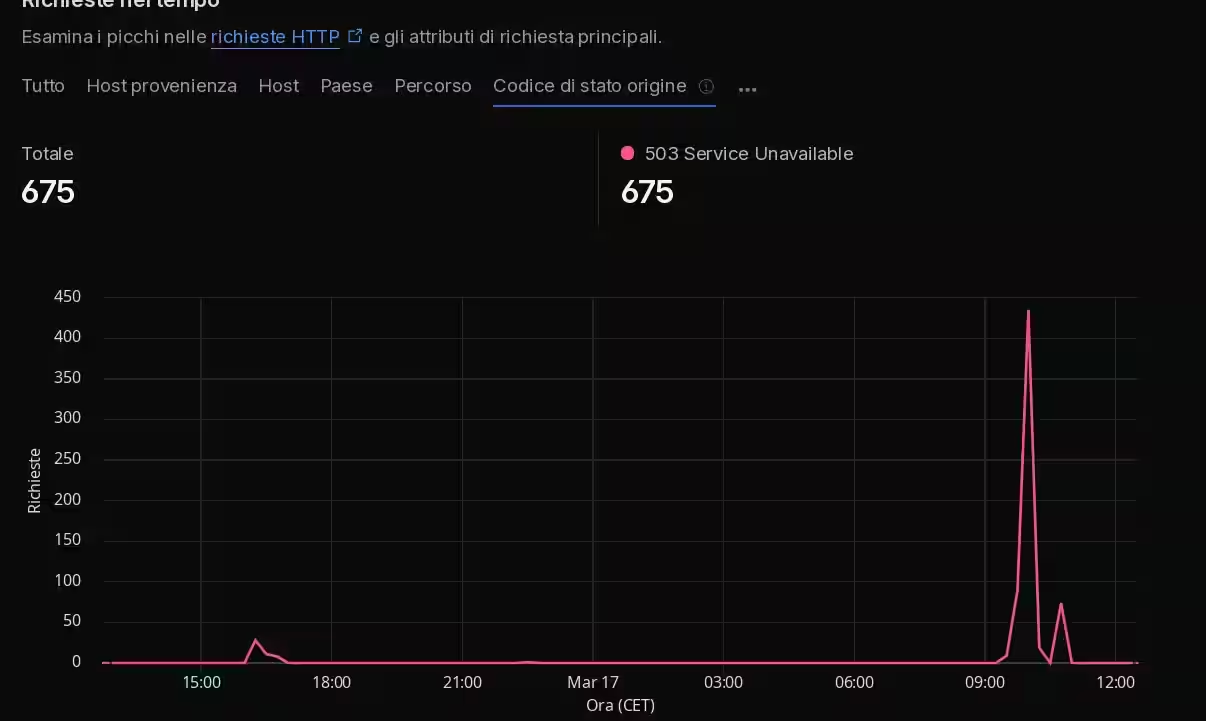
The main symptoms detected by logs and monitoring systems were a spike in 503 Service Unavailable errors and 522 Connection Timed Out errors. These did not indicate an application failure, but rather the server’s physical inability to allocate memory to launch new processes and respond to legitimate clients.
Monitoring the load on the machine during the incident revealed a critical structural limitation in the configuration of the origin server, provided by a well-known managed hosting provider.
Anatomy of the Attack: Layer 7 DoS and Vulnerability Scanning
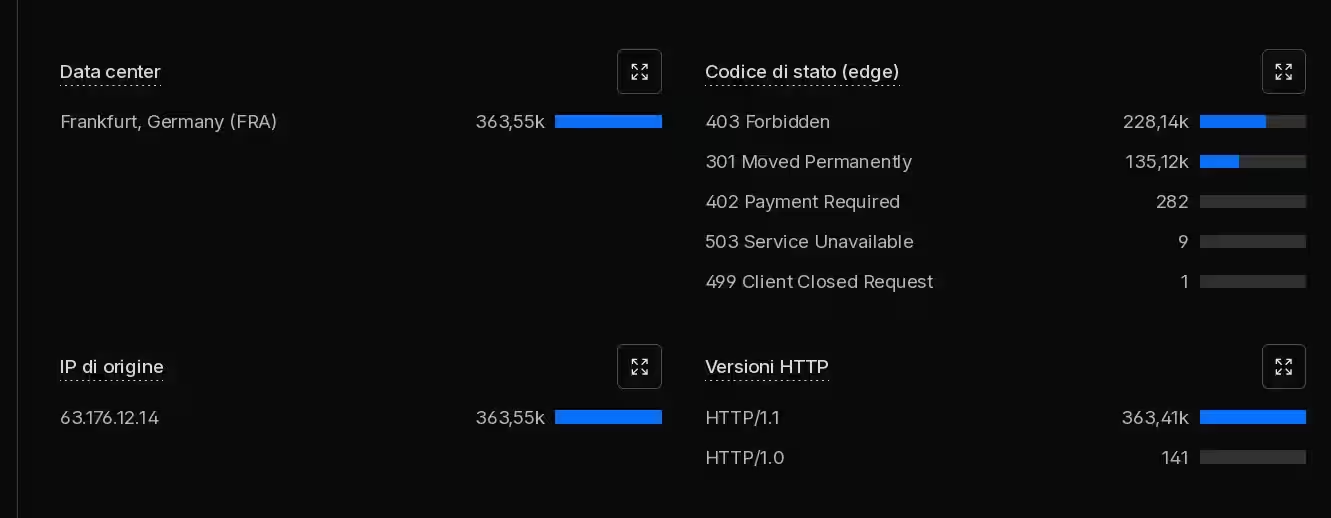
Technical analysis of the attack revealed a sophisticated operation. The offensive was launched from a single IP address (63.176.12.14) geolocated in Frankfurt and belonging to the Amazon AWS infrastructure. In less than two hours, this node generated over 363,550 requests, masquerading behind various User-Agents to simulate real browsers.
The attack vectors focused on two fronts:
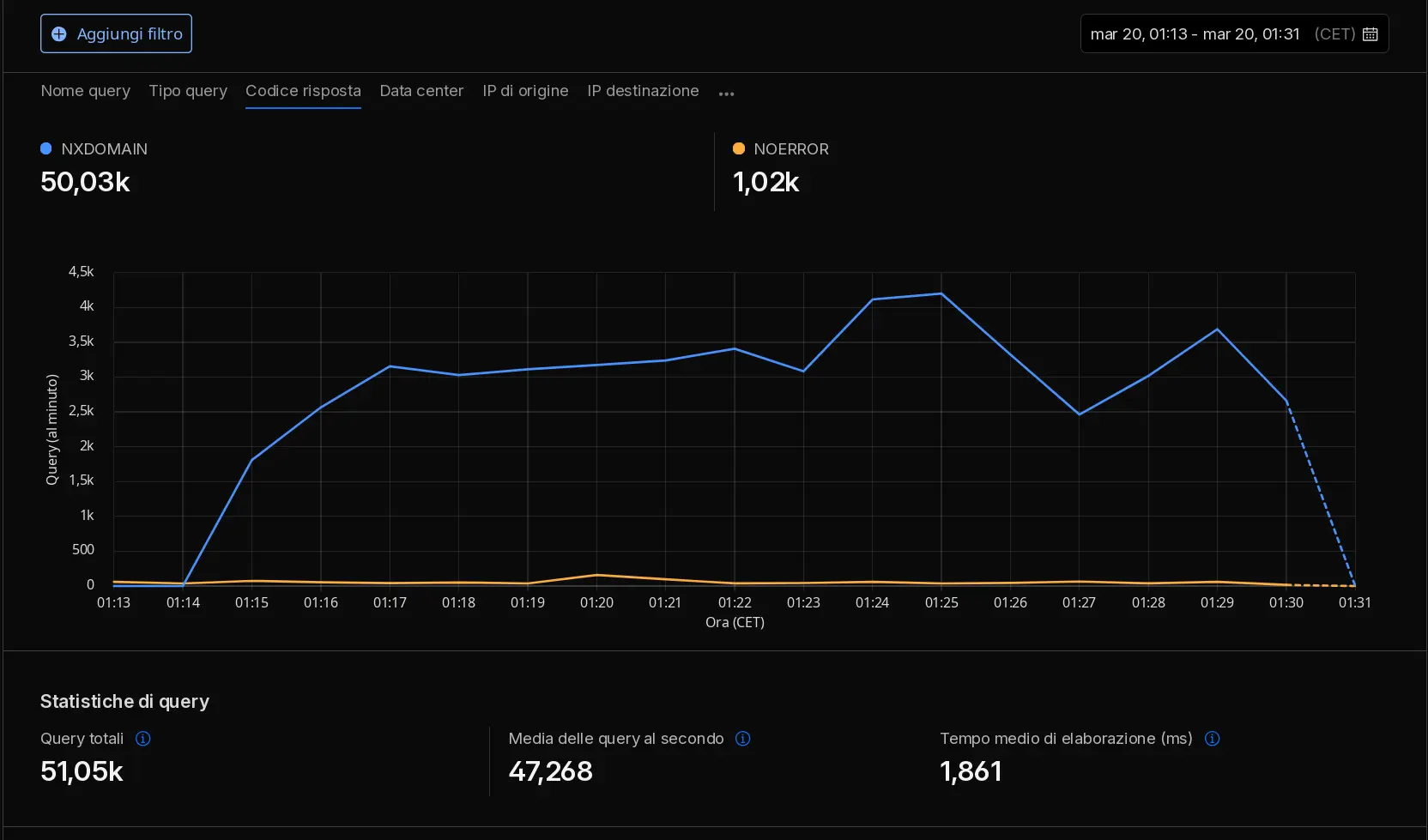
- Aggressive DNS enumeration: The analysis revealed an anomalous volume of invalid DNS requests; through this targeted enumeration, the attacker distributed queries across various records in an attempt to bypass Cloudflare and directly target the server’s real IP address.
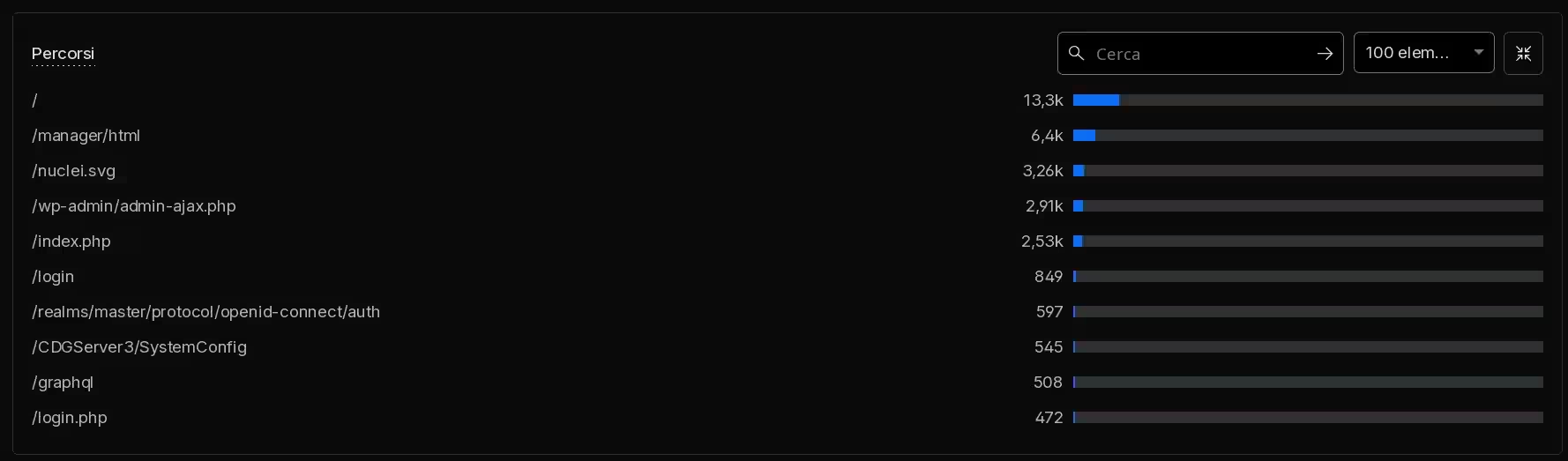
- Automated vulnerability scanning: The attacker used a template-based tool called the Nuclei vulnerability scanner. The use of this tool was confirmed by over 3,200 requests directed to the specific test path.
If your company frequently experiences abnormal traffic spikes, a thorough analysis is essential. Discover our services of Cloudflare consultancy to proactively blocking malicious bot traffic at the Edge.
/nuclei.svg.The "Cloudflare Cache Busting" Threat
One of the most damaging techniques used during the incident was Cache Busting. The bot constantly sent complex query strings and dynamic paths to force the server to generate new pages, completely bypassing the cache.
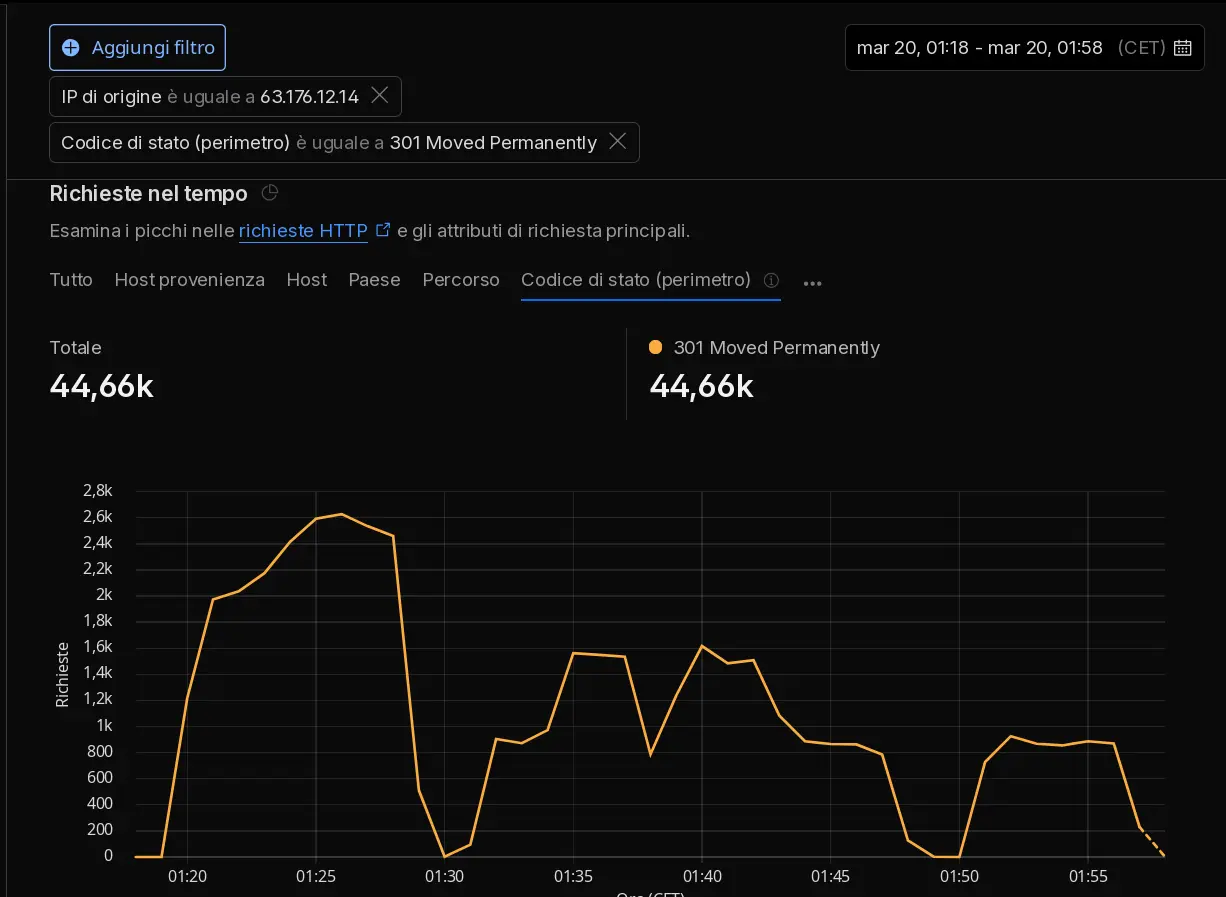
This operation caused an immediate 47% drop in the Cache Rate. In addition to the directly harmful requests that were blocked, the system forced the generation of approximately 135,000 logical redirects. Since these redirects were processed at the application level rather than on the CDN node, they consumed valuable CPU cycles, exacerbating resource depletion.
The strategic remediation involved a targeted intervention on query string management: advanced rate-limiting rules were implemented at the Edge for dynamic parameters, and the selective removal of unnecessary query strings was planned to maximize cache effectiveness.
The Hidden Bottleneck: Resolving Apache and PHP-FPM 503 Errors
A more in-depth technical investigation revealed the true cause of the prolonged service disruption. The recorded 503 errors were not related to critical issues in the application code, but to architectural and configuration inefficiencies on the managed hosting platform.
The Virtual Private Server had been provided with a strict limitation: a maximum cap of only 10 simultaneous PHP-FPM processes. Under attack, this paltry threshold was saturated in a matter of seconds, generating an infinite wait queue (starvation) that also paralyzed the Apache daemon, leading to total service degradation and preventing real customers from browsing.
The incident highlighted the service provider’s severe lack of transparency. Although the client had already reported identical anomalies on multiple occasions in the past, support proved entirely ineffective: faced with explicit requests for escalation and access to system logs, the provider repeatedly evaded the questions, omitting any investigation into the root causes and limiting itself to the systematic restart of services. This evasive approach directly contradicted the evidence from our granular monitoring, which clearly showed a lack of allocation of the computational resources necessary for the web stack.
Relying on standard configurations masks critical bottlenecks. It is essential to proceed with advanced optimization of the web servers to ensure operational continuity.
Mitigation and Scalability: How We Blocked the Attack and Increased Capacity by 150%
Once the causes were identified, the mitigation strategy combined actions on the origin infrastructure and the Web Application Firewall.
Before and After Comparison:
- PHP-FPM Capacity: Increased slots from 10 to 25 processes, ensuring 150% more capacity for dynamic traffic management, while keeping the system secure to prevent memory crashes.
- Traffic Management: Implementation of a module for real IP visibility and creation of a Black Hole via Plesk on Apache to neutralize direct scans on non-existent virtual hosts.
- Edge Defense: WAF policies automatically intercepted approximately 228,140 malicious requests. Massive HTTPS redirects were routed directly to the perimeter network.
The results were immediate. A few days later, a second wave of attacks totaling 360,000 requests was 100% mitigated by the firewall, ensuring total stability without any service disruption for the customer.
Conclusions and Next Steps for E-commerce
This stress test revealed clear architectural points of failure that, under normal conditions, would have remained hidden beneath the surface of automatic server reboots. Mapping and resolving these structural limitations allowed us to isolate application anomalies from true system-level failures.
The future action plan for the infrastructure includes a Zero Trust approach, strengthening WAF rules against automated scanners, and advanced sanitization of query strings to prevent future cache-busting attempts. To learn more about the theoretical foundations of the countermeasures adopted, I recommend the guide on how to prevent botnet attacks through Layer 7 mitigation.
Technical FAQs
What is the difference between a Layer 3 and a Layer 7 DDoS attack?
A Layer 3 attack aims to saturate network bandwidth. A Layer 7 attack, such as the one analyzed in this case, targets the application layer by simulating legitimate HTTP/HTTPS traffic to exhaust CPU, RAM, or process limits (such as PHP workers).
Why were 503 errors still being logged even behind a WAF?
If a bot manages to bypass the cache by querying dynamic paths, it forwards the request to the origin server. If the server has insufficient configurations (e.g., few PHP workers), it saturates its processes and returns a 503 error to the WAF, which in turn displays it to the user.
What is a server-level Black Hole?
It is a network or web server configuration designed to silently absorb and discard (Deny from all) malicious traffic or requests directed at the IP address before they consume valuable application resources.
Don’t let hidden configuration limitations destroy your e-commerce sales due to slowness or 503 errors. Map your infrastructure and resolve bottlenecks at the root.